Kamis, 29 November 2012

Idioms, Not Idiots, for Promoting Speaking Skills

Students often view presenting in front of the whole class with the same disdain as facing a firing squad or are so self-conscience that they act like idiots. Additionally, finding precious time for whole class presentations can eat into high-paced curricular calendars.  We are still trying to get back on track from Hurricane Sandy, so this project was a quick way to get students to present and share without the stress of being in front of the class or take up class time. Students need to be able to present to audiences in person, but I do not agree with a "sink or swim" approach. This is an initial project for scaffolding the teaching of presentation skills.

Using OMM & BYOD for Recording Student Voices


As an introductory activity for John Steinbeck's novella, Of Mice and Men, students worked in groups to record a quick conversation using idioms (not idiots) from the 1930's.

Open those ears and try to figure out what they are talking about in those hackney country accents (I apologize to those of you who live in the country).


Equipment Needed

  • One student in the group needed a device (smartphone or ipod) with a voice recorder. I recommend encouraging students to use a free MP3 voice recorder instead of a standard voice recorder that saves files as .m4a for easier integration into Edmodo. 
  • If students record in .m4a format, files can be converted using a free web program such as Fileminx (just be mindful of the pin-up ladies in the background if you direct students to the site). I did the conversions for the students.

The Process

Edmodo easily embeds MP3's- just click play
(on Edmodo, not on this picture), no downloading!
  1. In groups of no more than 4, students reviewed a list of idioms used in OMM and drafted a script on paper.
  2. Students used one smartphone/ipod per group to record about a 30 second conversation. In some cases, I even let a few groups use my Android phone to record.
  3. The recordings were emailed me to me because they would not upload directly to Edmodo from students' phones. We tried a few different techniques (go through Google Drive and Edmodo's library), but none seemed to work. I also wanted to minimize clogging the class' main page with too many posts. 
  4. I saved the files and converted as needed and then uploaded groups of them to Edmodo as a note. I didn't save the students' names to each project, just give each recording a different number.
  5. Students listen to the recordings and reply with comments. No grading for this assignment because the focus is on the process, but feedback was provided about how to improve performances.
Alternatively, for sharing audio files using YouTube instead of on Edmodo, I created title slides in PowerPoint which I saved as JPEG's, and used Windows Movie Maker to combine the visual and audio elements. It only took a few minutes of trial and error to create the video above.  

I'm not keen on uploading the audio files to Youtube without some sort of proper visual, but the visual needs to not be distracting or too complex because the emphasis is on the audio for this project. I did not want to create a video, but to share the student recordings on this blog, I needed to.  I'm figuring out the BYOD as I go, so if you, dear reader, have more efficient techniques, please share! 

Projecting Future Presentations

For the first time using this process, the collaboration and anonymity of the project allowed reluctant students to get into character and enjoy the project.  Students didn't have to feel like self-conscience idiots because no one other than their other group members could recognize their voices and listeners would be too focused on figuring out the idioms.  

When students record an oral presentation again (this went so well that I guarantee we will do this again!), they will be solo and identified. The next project will eventually lead into a group video using their devices and finally an individual video or screencast.  


Senin, 26 November 2012

Guest Post: MJ Fletcher-- Opening the Door to Writing


GUEST POST:  Continuing the conversation on writing, author MJ Fletcher explains how he first began his adventures with the written word.


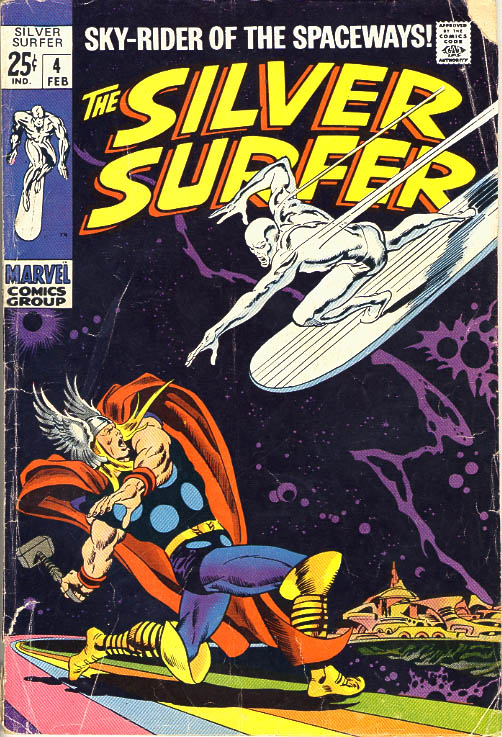
"What's that?" I asked my mother as I stared at the explosion of color and action on the cover.


"It's a comic book, do you want it?"

Two men locked in mortal combat, one wearing a massive red cape while the other, some type of alien, attacked him. How could I not want it? It screamed at me about other worlds and possibilities unimaginable by my young mind.

"Yes." I was enthralled and in that moment my love affair with reading began.

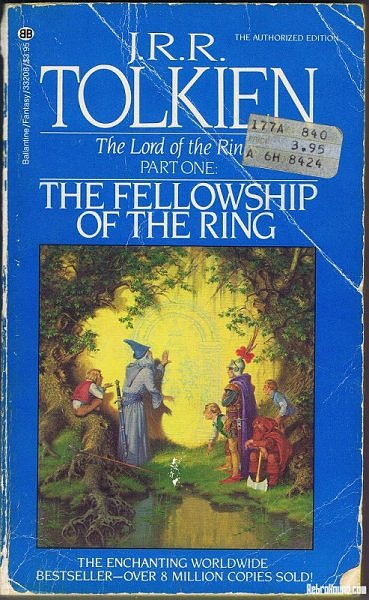
My mother never cared what I read; comic books, magazines, newspapers, books, as long as I was reading she was satisfied. I was a voracious reader of comic books and when I discovered the Lord Of The Rings I became an equally avid reader of prose.


I would go out and ride bikes with my friends, do little league or play war in the woods. But when I came home I was equally as happy with Spider-Man as I was with C. Auguste Dupin,  going on amazing adventures or solving mysteries, whichever, I loved every moment. I was hooked, a reader for life and I knew it. Going to the library was one of my favorite excursions or even better the book store where I could take books home and never have to return them. They were mine to read over and over again.

I find people always want children to read the right books, and I find that odd since there are no wrong books. If my mother had turned her nose up at that comic book I may never have become the voracious reader I am today. But there in lies one of my secrets, my mother was also a writer. She knew better than to try and force my tastes in books, instead she allowed me to sample and discover.

At school when we would have book reports, most of my class would allow the librarian or teacher to "suggest" a book for them. I, on the other hand, would create piles trying to determine which one I most wanted to read.

Then in fourth grade the next defining moment happened in Miss Smith's class. She gave us a simple assignment with one paragraph at the top of the page describing someone walking into dense fog. The instructions were to write the rest of the story. My classmates were all done rather quickly. I however filled the front and back of the page. I went home that night and started writing on my own and I haven't stopped since. I would give my short stories to my mother and she would correct them. I got used to seeing red ink all over my creations.

I was lucky enough to have a parent who encouraged not only my love of reading but also my penchant for writing. Writing is a solitary and lonely pursuit but one of great personal reward. It demands constant attention and reinvention from its pursuers and takes it measure in full. But to sit down and create a new world or character who can reach out across a page and not only connect but impact a young reader much in the same way I was affected the first time I saw that comic book... is my ultimate goal each and every time I pound away at my keyboard.

Not everyone is as lucky as I've been. Many students think of reading and writing as a chore rather than something to enjoy. Let them read magazines or graphic novels, give them a simple writing  assignment to stir their imaginations and most of all if you see a spark of creativity...  foster it and help it to grow.
Our experiences define us and help form who we become. My name is MJ Fletcher and I'm a writer thanks to those defining moments in my life.


I've written comic books, short stories, and novels. My love of the written word has never ebbed and I hope it never will. New stories and ideas are always popping into my head, begging to be told. My latest creation, The Doorknob Society Saga, will take you to the wildest places, with a crazy group of friends, with just the touch of a doorknob.  The first three books in the series, The Doorknob Society, The Impossible Engineers, and The Mapmakers Union are now available with book one, The Doorknob Society currently free for download on Kindle.


Rabu, 21 November 2012

Tagxedo: A Tuxedo for Word Clouds

Tagxedo is another nifty free tool for creating customized word clouds. Compared to Wordle, Tagxedo has more options and the ability to customize the shape of the word including uploading a picture of your own choice. Tagxedo will also use one's blog, tweets, website, and other sources for the content of the cloud.

Think of Tagxedo as a way for dressing up word clouds. While I like Wordle's simplicity for using a word cloud for analysis of a speech, poem, or short story, I prefer the use of Tagxedo for embedding symbolism in student-created projects and to guide students through the process of making artistic choices in an activity that is relevant to their own lives.

How to...

Students wrote "Where am I from" poems as modeled by poet George Ella Lyons and then created a word cloud  symbolic of their identity and the places that shaped their identity. The screencast below shows how to use Tagxedo and upload your own image (by the way, using Screencast-O-Matic, I created the screencast and uploaded it to Youtube in about 7 minutes total during 2nd period today).


Student Examples

Students posted their projects to their small groups in Edmodo for review. Students can then discuss artistic choices, as well as easily see commonalities among their classmates.  This quick project could also be used as an ice-breaker in the beginning of the year as a way for the students and teacher to get to know one another. 


We are using this activity as an introduction to John Steinbeck's Of Mice and Men-- a novella centered on the themes of belonging to and yearning for one's own place. OMM is also rich in symbolism ("Tell me about the rabbits, George!"), and this activity provides an introduction to the meaning of chosen symbols. 

Student often question an English teacher's analysis of literature: How do you KNOW John Steinbeck intended the rabbits to represent George and Lennie's dreams? One answer is found in asking the author and conducting literary research: go through John Steinbeck's published letters and journals or contact the folks at the Steinbeck Institute in Salinas, California (I have!). The other answer can be found in activities where students are authors and create. Students should be making the same kind of informed choices when crafting a creative piece. The three students pictured to the left used the star, infinity, and yin-yang shapes. While I, as the reader, can postulate that these shapes represent always reaching for balance in one's learning and life, the only way to know conclusively is to ask the artist. So ask the students, "why?"  You just might learn something new.


Selasa, 20 November 2012

How to (Not) Fill a Blank White Page

Working with Ms. MorrisMr. Lindgren-Streicher, and Mr. Thomasson back in August and similar in concept to Google's 20% time projects, the Blank White Page Project was conceived as a way to connect students and teachers through questioning and self-directed learning. While we are implementing this within the confines of the continental US, this project could be adapted to include classrooms around the globe.

The Process

  1. The class discusses types of questions and students make a list of questions they have always wondered about. The questions should be open-ended and require research and creativity to answer. 
  2. One of the teachers in the group creates a Google form for recording and a Google site for housing the questions. 
  3. Students go to the BWP site and record their questions.
  4. The teacher moves the questions entered by his/her students on the Google form to the various categories on the BWP site.
  5. Students return to the site and peruse the questions, choosing one to answer. 
  6. Students create "an answer" to the question, share it with the teacher, and the teacher posts it to the site. Answers can be in any form as long as they address the question.

Students can complete the BWP project individually or in groups comprised of members from their own school or elsewhere. Using Edmodo, Twitter (#BWP12), Skype or Google Hangouts, students can collaborate on creating and sharing answers. This process can be continually repeated throughout the year and additional teachers and classes can be added to the site. Additional participants could be found via networking on Twitter with other educators-- just pop into a #flipclass chat on Monday nights-- or via posting a request to one of the communities on Edmodo. I've met teachers online from all over the country, Canada, and Australia, many of whom are interested in connecting their classes.


Grading

Since this is project based learning, students could be scored with rubrics on the use of technology and creativity and effort in answering the chosen question. Self evaluation and reflection is also an important piece of the assessment process.  Students could also be additionally evaluated on their communication skills and ability to collaborate. The objective is for students to take ownership of their learning, so they should "own" the grade, not the teacher.


----------------------------------------------------------------------------------------

MY Implementation Issues


This has really been bothering me. I was so excited to begin this project (and I STILL AM excited to continue it), but I have met with some set-backs this year that have impeded the process and participation. I'm very frustrated by these set backs and not being able to better connect with the other teachers and classes.

  1. "Hey guys, wait for me!" Not all schools are on the same schedule. My collaborative colleagues began classes in August, and my school year did not begin until after Labor Day in September. I was the last one in the group to get my students started. Between mandatory diagnostic testing and getting the school year rolling, I wasn't able to get started on BWP until mid-September, a full month and a half behind the other participants. 
  2. "We can't get in the computer lab today."  While we have computer labs, media centers, and now a solid wi-fi infrastructure for BYOD in my district, we are not as far along with integrating technology on a daily basis in the classroom as compared to a 1:1 district. I am bound by scheduling constraints and access to the computers themselves. We have 6 computer and mobile labs for 2000+ students right now and students' home access is inconsistent.
  3. "What's a Google Site?"  I may be a MS Word wizard, but I haven't earned my wings yet flying through the cloud.  I didn't learn about Google Sites and how to create Google Forms until this summer and, other than using Microsoft programs, my students have also had limited exposure to technology in the classroom. This September was the first time many of my students have filled out a Google Form. My district is on the cusp of emerging from a ground-based school to one in the clouds as more teachers integrate web 2.0 tools in the classroom, and (after much delay) we are finally becoming a Google school and students will have their own Google Drive and access to collaborative apps. We are all learning as we go! 
  4. "We got walloped by a hurricane."  Seriously, walloped. I was all set three weeks ago to get students started on answering questions for BWP, and then we got hit by Hurricane Sandy and school was closed for two weeks to be an evacuation shelter for our regional community. Numerous teachers and students were and currently are displaced and the past week has been about the recovery efforts and supporting the community. I can't complain about a change in plans considering the circumstances. 


Thinking Ahead


For any collaborative project that extends beyond the bounds of the physical classroom, teachers need to consider the following logistics: 

  • Infrastructure: Does the school/classroom have the ability to connect to others? Does the school have available technology for completing the project and staying in contact?
  • Timing: How will the school calendars and schedules hinder communication and the process?  What are the timelines for the project?
  • Participants: Are all participants on the same page? Do all have the same expectations? Are all participants able to give the same level of commitment?  

If I've had issues on a national-scale, these could be compounded when applied to a global project. It is important to be proactive and prevent issues from occurring so that the project will be a success. I want the BWP to be a success because I know that it is a valuable self-directed project for my students, as well as myself. So, after much delay, we are ready to move ahead.


We all have so much to learn! 


"Be patient toward all that is unsolved in your heart and try to love the questions themselves. Do not now seek the answers, which cannot be given you because your would not be able to live them. And the point is to live everything. Live the questions." 
- Rainer Maria Rilke